
 News
News  February 3, 2025
  3 min.
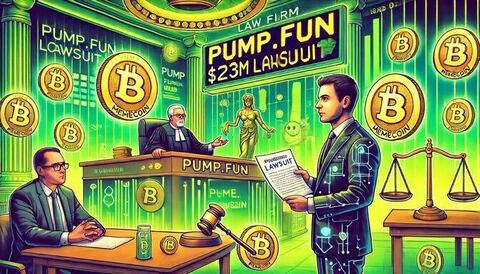
In an ironic twist that highlights the complex world of cryptocurrency litigation, a law firm that recently filed a class-action lawsuit against memecoin creator Pump.fun is now being linked to a controversial token called “Dog Shit Going NoWhere” (DOGSHIT2). The connection emerged after crypto community members discovered matching wallet addresses between court documents and the token’s creation, raising questions about potential conflicts of interest.
Legal Action Meets Crypto Controversy
The controversy centers around a January 30 lawsuit filed by Burwick Law and Wolf Popper, which alleged Pump.fun made nearly $500 million in fees from creating unregistered securities. However, the case took an unexpected turn when observers noticed that a wallet address included in Exhibit C of the court documents – meant to demonstrate the ease of token creation – matched the creator address of DOGSHIT2, a token that ironically reached a $23 million market capitalization.
Adding to the peculiarity, the token’s listing came with an explicit warning stating “Don’t buy this coin,” yet still managed to attract significant investor interest. The timing of the token’s creation on October 31 last year, coinciding with details in the court documents, has further fueled speculation about the law firms’ involvement.
Market Response and Broader Implications
The revelation has triggered significant market movement, with DOGSHIT2’s value experiencing dramatic swings. After reaching a peak market capitalization of $23 million on January 31, coinciding with the lawsuit’s filing, the token’s value has since plummeted to approximately $2.4 million. The token hit its all-time high of $0.003968 on February 2, before experiencing a sharp 34% decline.
This development comes amid increased memecoin activity, including celebrity-linked tokens and surging trading volumes on Pump.fun, which recently recorded $3.3 billion in weekly trading volume. Neither Burwick Law nor Wolf Popper have responded to requests for comment on their alleged connection to the controversial token, leaving many questions unanswered about the intersection of legal oversight and cryptocurrency speculation.