
 Educational
  June 5, 2026
  14 min.
Nigeria’s online betting industry didn’t grow quietly. Over the last decade, it erupted — pushed forward by cheap smartphones, a young population hungry for entertainment, and a regulatory environment that, for better or worse, gave operators plenty of room to experiment. Today, the country sits at the centre of Africa’s largest gambling market, a sector projected to generate USD 2.59 billion in gaming revenue in 2025 and grow at a compound annual rate of 8.25% through 2030. Within that enormous ecosystem, three components have become the real engines of growth: account rewards, referral programmes, and payment infrastructure. Understanding how each one works — and how they interact — tells you a great deal about why Nigerian bettors have embraced online platforms so completely.
From Pools to Pixels: A Brief History of Betting in Nigeria
Sports wagering in Nigeria predates the internet by decades. Long before app stores existed, football pools grew into a national ritual — coupon-based prediction games that spread from the UK across West Africa and took root in Nigerian towns and cities during the 1970s and 1980s. Pools agents became community figures; filling out a coupon on a Saturday morning was as routine as buying bread. The entire social architecture of the game — friend recommending a tipster, a neighbour sharing a winning combination — planted seeds that would later make digital referral mechanics feel completely natural to Nigerian bettors.
That culture of prediction and prize-chasing didn’t disappear when the internet arrived. It migrated. When Bet9ja launched in 2013, it stepped into a market that already had an appetite — it simply needed a digital container. Funny to note how the bet9ja old mobile app set-up is still so popular in Nigeria.
Within a few years, SportyBet, BetKing, Nairabet, and dozens of others had followed, each adding layers of promotions, bonuses, and loyalty mechanics designed to convert that old pools instinct into daily digital engagement.
The legal backdrop matters here too. For years, the National Lottery Regulatory Commission (NLRC), established under the National Lottery Act of 2005, served as the primary federal body licensing operators and setting compliance standards. That changed dramatically in late 2024, when Nigeria’s Supreme Court ruled that lottery and betting regulation falls within the legislative powers of individual states rather than the federal government. Federal licences were effectively voided outside the FCT, and operators scrambled to secure state-level approvals. Lagos, with its own Lagos State Lotteries and Gaming Authority (LSLGA), emerged as the most advanced jurisdiction almost immediately. This seismic regulatory shift reshaped the competitive landscape for every operator seeking to legally serve Nigerian bettors — and it made the battle for user acquisition via rewards and referrals considerably more intense.
Account Rewards: More Than Just Welcome Bonuses
Welcome Bonuses and Ongoing Promotions
The welcome bonus is the most visible weapon in any bookmaker’s acquisition arsenal. In Nigeria, the scale of these offers has grown notably as competition tightened. Most licensed platforms now offer a 100% match on first deposits, with some international operators pushing that figure to 200% or even 300%. Bet9ja’s accumulator bonus can boost multi-leg winnings by up to 170% depending on the number of selections. These headline numbers attract clicks — but the real retention work happens in the ongoing promotions stack.
Beyond sign-up, operators layer in free bet credits, boosted odds on flagship football matches (the English Premier League, the Champions League, and AFCON fixtures dominate), cashback offers, and early payout features. The “1UP” mechanic common on local platforms settles a match-winner bet the moment a team goes one goal ahead — a small feature in theory, but the kind that earns genuine loyalty among regular bettors who have been burned by late equalisers.
Loyalty Programmes and VIP Tiers
Loyalty programmes in Nigeria’s betting space are maturing quickly. International operators like Stake have introduced multi-tier VIP systems that include daily rakeback, dedicated account managers, and Naira-denominated cashback. Local operators have responded with their own points-based systems, though the depth and transparency of these programmes varies widely across the market. The clearest trend is personalization: higher-value players increasingly expect tailored offers rather than generic promotional emails, and the platforms that can actually deliver that are winning the retention battle.
Referral Programmes: The Word-of-Mouth Growth Engine
How the Referral Economy Works in Nigeria
Referral marketing, at its core, is a word-of-mouth initiative designed to incentivise existing customers to introduce their contacts to a product — and in Nigeria’s betting market, that definition barely scratches the surface of what these programmes actually accomplish. In a country where WhatsApp groups, neighbourhood networks, and social trust carry enormous weight, a well-structured referral system is genuinely powerful marketing infrastructure, not just a promotional line item. This mobile marketing is what makes the Nigerian betting apps so popular in the country.
The mechanics are straightforward: every registered user receives a unique referral link or code. Share it with a friend; when that friend registers, makes a qualifying deposit, and places a bet, the referrer receives a cash reward. Critically, on most leading platforms in Nigeria, this reward is credited as withdrawable cash, not locked bonus funds — a distinction that matters enormously to bettors who have learned to read the fine print. SportyBet credits referral bonuses instantly and without the rollover conditions that frustrate users on some international platforms. Bet9ja’s agent referral system works similarly, making the process accessible even to users who aren’t particularly tech-savvy.
What amplifies this dynamic specifically in Nigeria is the social distribution layer. Unlike paid advertising, referral traffic arrives pre-qualified — a friend vouching for a platform is worth more than any banner ad. Operators that have built referral mechanics around WhatsApp sharing and USSD-compatible flows (so users without smartphones can still participate) have seen disproportionate user growth in secondary cities and rural areas where conventional digital marketing barely penetrates.
| Platform | Referral Reward Type | Min. Friend Deposit | Reward Paid As | Processing Time |
| Bet9ja | Cash reward | Variable | Withdrawable cash | Instant |
| SportyBet | Cash reward | Qualifying bet required | Withdrawable cash | Instant |
| BetKing | Referral bonus | ₦100 minimum | Bonus credit | Within 24 hours |
| 1xBet | Tiered commission | Qualifying bet required | Bonus balance | Varies |
| Stake | Referral code bonus | Deposit-based | Crypto/Naira credit | Instant |
Table 1: Overview of referral reward structures across major Nigerian betting platforms as of 2025–2026. Terms are subject to change; always verify current conditions on each operator’s site before participating.
Payment Access: The Real Competitive Battlefield
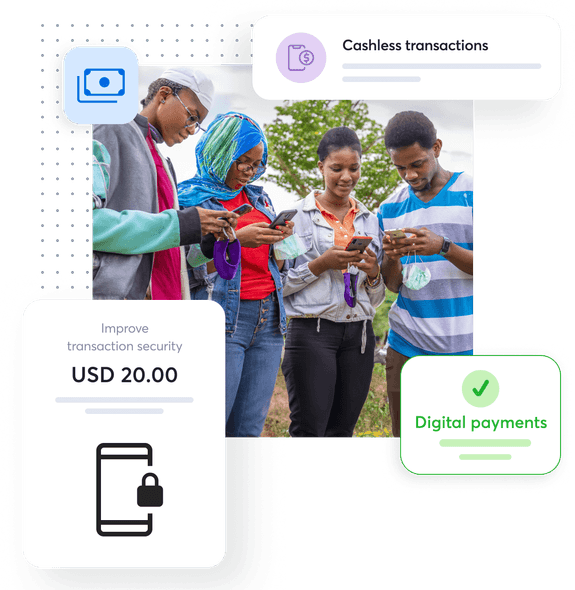
Show Image Nigeria’s fintech boom — driven by platforms like OPay and PalmPay — has directly transformed how bettors deposit and withdraw funds.
Mobile-First, Bank-Second
Payment access is where the Nigerian betting experience diverges most sharply from European or North American norms. The majority of Nigerian bettors interact with their accounts primarily through smartphones, and the payment ecosystem has evolved accordingly. OPay and PalmPay — both fintech platforms embedded in everyday Nigerian commerce — have become the fastest deposit methods on most sportsbooks, with funds reflecting in seconds. Debit cards remain popular for users who prefer the familiar Visa or Mastercard flow, but mobile money is where the transaction volume is clearly moving. The top betting payment methods in Nigeria today span OPay, standard online bank transfers, debit cards, and USSD codes, each serving a different slice of the user base.
USSD: The Offline Revolution
One of the most distinctively Nigerian features of the country’s betting payment infrastructure is the role of Unstructured Supplementary Service Data (USSD) — short dial codes, unique to each bank, that allow users to fund betting accounts without any internet connection whatsoever. A bettor using GTBank dials *737*50*Amount*153#; a Zenith Bank customer uses *966*6*7842#. The transaction settles in real time, the minimum deposit can be as low as ₦50, and the fee per transaction sits at around ₦20 — a small price to pay for true offline access.
This matters in a country where mobile internet penetration, while growing fast, is still uneven outside the major urban centres. USSD democratised betting access in a concrete sense — it removed the smartphone requirement entirely. BetKing has specifically positioned its multiple USSD-compatible deposit methods as part of its appeal to users in Nigeria’s smaller cities and towns, where the bank app is still a luxury but every phone can dial a code.
For those curious about how crypto fits into this broader payment picture, platforms operating at the intersection of crypto and online gaming offer a useful parallel: crypto casino platforms increasingly use digital assets as an alternative payment rail, mirroring the same logic that makes USSD attractive — removing friction between a user’s funds and their betting account.
The Nigerian Betting Payment Landscape at a Glance
| Payment Method | Avg. Deposit Speed | Withdrawal Available | Min. Deposit | Key Advantage |
| OPay / PalmPay | Instant | Yes | ₦100 | Fastest mobile wallet option |
| Bank Transfer | 2–5 minutes | Yes | ₦100 | Universal, works via app or internet banking |
| USSD Code | Instant | No | ₦50 | No internet connection required |
| Debit Card (Visa/MC) | Instant | Rarely | ₦500 (some platforms) | Familiar flow; Paystack-linked |
| Cryptocurrency | 1–60 minutes | Yes | Variable | Growing fast; USDT popular for naira hedging |
| Quickteller / ATM | Variable | No | ₦100 | Wide coverage, offline-accessible |
Table 2: Comparison of common betting payment methods available to Nigerian bettors in 2025–2026. Processing times and limits vary by operator and bank. Always check current terms on your chosen platform before making a transaction.
Crypto as a Growing Payment Layer
Cryptocurrency adoption in Nigerian betting is accelerating, driven partly by currency concerns — naira volatility has pushed some bettors toward USDT as a stable-value alternative — and partly by the global expansion of crypto-native operators. Platforms like BC.Game accept over 100 cryptocurrencies, and local operators are beginning to follow that lead. The regulatory picture around crypto payments remains deliberately ambiguous, but in practice, few licensed operators have faced challenges for accepting digital assets alongside traditional naira deposits.
Case Study: The Local vs. Global Divide Post-2024
The Supreme Court ruling created a two-speed market. On one side, locally incorporated operators like Bet9ja, SportyBet, and BetKing rapidly secured state licences — particularly in Lagos — and leaned into their established trust relationships with Nigerian bettors. Their payment infrastructure was already naira-centric, their referral programmes were embedded in WhatsApp culture, and their customer support teams were largely Nigerian.
On the other side, international operators — 1xBet, Betano, Stake, and newer entrants like Meridianbet, which secured its LSLGA licence in late 2024 — compete primarily on the depth of their bonus offers and the breadth of their payment options. The latter group tends to have richer VIP programmes and stronger crypto support, but their referral mechanics are often more rigid, with higher minimum deposit thresholds and less flexible reward structures.
For everyday Nigerian bettors, local operators still win on trust and payment familiarity. For higher-volume bettors and crypto users, international platforms offer more sophisticated reward ecosystems. The market is, in effect, stratified — and both layers are growing simultaneously.
Conclusion
Nigeria’s online betting ecosystem has built itself on three interdependent pillars: compelling account rewards that convert curiosity into registration, referral programmes that harness the country’s powerful social trust networks, and payment infrastructure that has genuinely met bettors where they are — offline and online, smartphone and feature phone alike. The 2024 regulatory overhaul adds a layer of complexity the industry is still working through, but the fundamental growth trajectory remains firmly intact.
Looking ahead, the operators that will thrive are those that move beyond the acquisition bonus arms race and invest in real retention mechanics — smarter loyalty tiers, faster and more reliable withdrawals, and genuinely localised customer experiences. As the payment landscape continues to evolve, with fintech platforms embedding loyalty features directly into everyday transactions and crypto-rails becoming more viable for mainstream users, the line between a betting wallet and a digital bank account may grow thinner than anyone currently anticipates. For Nigerian bettors, that convergence could mean more access, more choice, and — if regulation keeps pace — considerably more protection too.