

 Educational
  June 5, 2026
  20 min.

Online betting has evolved into one of the most heavily regulated digital industries in the world. Whether a customer signs up with a sportsbook in the United Kingdom, Ireland, Canada, or elsewhere in Europe, registration and identity verification are now central parts of the process. These checks are not only designed to prevent fraud and money laundering, but also to protect vulnerable users and ensure operators comply with national gambling laws.
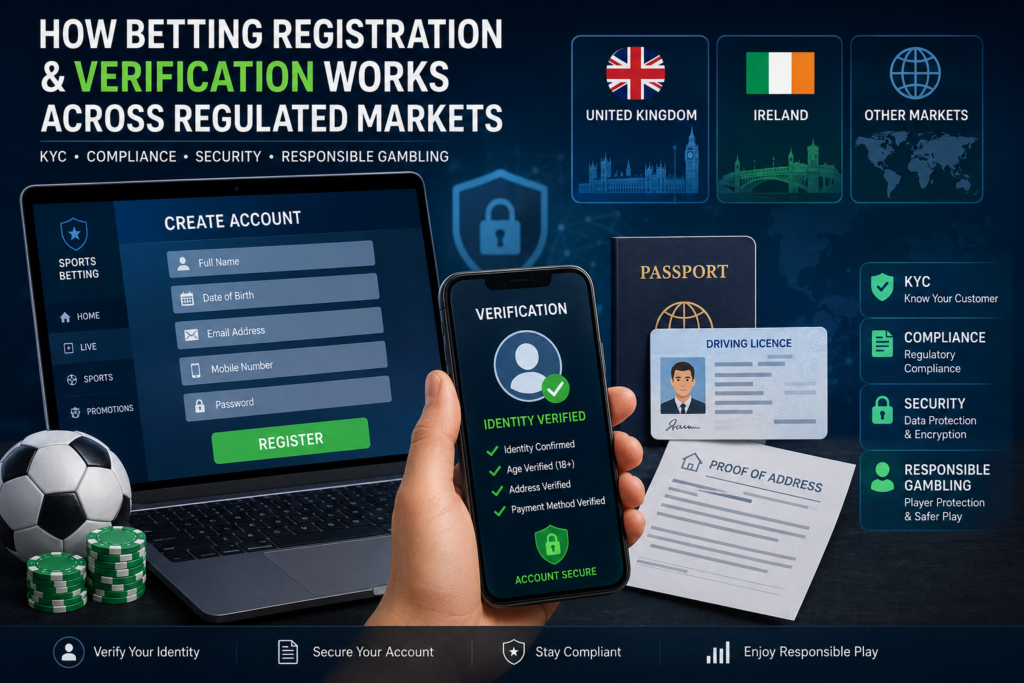
Over the past decade, governments and regulatory bodies have tightened requirements around Know Your Customer (KYC) procedures, anti-money laundering (AML) policies, and age verification standards. As a result, onboarding experiences can vary significantly depending on where a betting platform operates.
This guide explains how betting registration and verification work across regulated markets, highlighting the differences between the UK, Ireland, and other jurisdictions while examining the broader role of compliance in modern online gambling.
Why Betting Sites Require Verification
At its core, verification exists to establish that users are who they claim to be. Regulated betting operators are legally obligated to confirm several things before allowing unrestricted gambling activity:
- The customer is above the legal gambling age
- The user is located in an approved jurisdiction
- Payment methods belong to the registered account holder
- The account is not being used for fraud or money laundering
- The customer is not self-excluded from gambling
These requirements stem from national gambling legislation and international financial crime regulations. In Europe, AML directives have pushed operators toward stricter onboarding systems, while local regulators enforce country-specific rules.
For example, the UK Gambling Commission (UKGC) requires operators to verify age and identity before a customer can gamble using real funds. The regulator also enforces strict affordability and safer gambling measures. According to the official UKGC guidance, operators must conduct customer due diligence and monitor transactions for suspicious activity.
Ireland has also introduced stronger oversight through the Gambling Regulatory Authority of Ireland (GRAI), which aims to modernize licensing and player protection standards.
The Typical Betting Registration Process
Although the process differs slightly between operators and jurisdictions, registration usually follows several standard steps.
1. Account Creation
The user first provides personal details such as:
- Full legal name
- Date of birth
- Residential address
- Email address
- Mobile number
Operators use these details to begin automated verification checks immediately after registration.
2. Identity Verification (KYC)
KYC procedures are the backbone of regulated betting registration. During this stage, sportsbooks verify a customer’s identity using databases, documents, or biometric checks.
Commonly requested documents include:
| Verification Requirement | Typical Documents Used |
| Proof of Identity | Passport, driving licence, national ID |
| Proof of Address | Utility bill, bank statement |
| Payment Verification | Debit card screenshot, bank confirmation |
| Age Verification | Passport or government-issued ID |
Many modern betting platforms use automated software that verifies documents within minutes. Others may require manual review if discrepancies appear.
3. Payment Method Checks
Before withdrawals are processed, operators often confirm ownership of payment methods. This helps reduce fraud, identity theft, and unauthorized transactions.
Checks may include:
- Matching cardholder names
- Reviewing transaction history
- Verifying bank account ownership
- Monitoring unusual deposit patterns
These procedures are tied closely to anti-money laundering obligations.
4. Ongoing Compliance Monitoring
Verification is rarely a one-time process. Regulated operators continuously monitor accounts for unusual activity.
This can include:
- Sudden spikes in deposits
- Large withdrawal requests
- Multiple accounts from the same IP address
- Changes in gambling behaviour
- Potential signs of problem gambling
Operators may request additional documentation even after an account has been active for months.
How the UK Handles Betting Verification
The United Kingdom is widely regarded as one of the strictest gambling markets globally. The UK Gambling Commission has progressively increased compliance requirements over recent years, particularly around affordability and safer gambling.
Key Features of UK Verification
Mandatory Early Verification
UK operators must verify age before customers can gamble or even access free-to-play products with realistic gambling mechanics.
Enhanced Affordability Checks
Some users may face affordability reviews if their gambling activity exceeds certain thresholds. Operators can request:
- Payslips
- Bank statements
- Tax records
This has become one of the most debated aspects of UK gambling regulation.
Self-Exclusion Integration
Operators are required to connect with GAMSTOP, the UK’s national self-exclusion scheme.
If a customer has self-excluded, betting sites must block account access immediately.
Ireland’s Growing Regulatory Framework
Ireland historically operated under older gambling legislation, but the market has entered a transition phase with updated regulatory reforms and stronger consumer protections.
Verification Standards in Ireland
Irish betting sites increasingly mirror UK-style compliance practices, especially among major operators licensed in both jurisdictions.
Typical Irish verification measures include:
- Identity checks during onboarding
- Proof of address requirements
- Payment verification
- Source-of-funds reviews for higher spending accounts
The verification experience itself can vary depending on the bookmaker. Some operators complete checks automatically through digital identity databases, while others still rely on manual document uploads.
For example, betting guides and registration walkthroughs published by sports-focused platforms like Toffeeweb often explain how Irish users navigate onboarding and identity verification processes when registering with licensed operators. In discussions surrounding account setup, resources such as the detailed guide on Bet365 Promo Code Ireland illustrate how verification requirements are now a standard part of regulated betting access rather than an optional step.
Verification Differences Across Other Markets
Not every regulated gambling market applies the same standards. While most countries require age and identity checks, the timing and intensity of verification can differ substantially.
Malta
Malta Gaming Authority (MGA) licensed operators are common across Europe. Verification standards are generally robust, though some operators allow limited activity before full verification is completed.
MGA guidance emphasizes risk-based due diligence and AML monitoring.
Canada
Canada’s betting landscape varies by province. Ontario currently operates one of the country’s most tightly regulated online gambling markets. Canada’s regulated betting market has expanded rapidly since single-event wagering became legal nationwide. \
As onboarding rules continue evolving across provinces, many bettors now look for independent educational resources that explain how verification and compliance systems actually work. The Playoffs’ Best Betting Sites Canada guide examine sportsbook licensing standards, KYC procedures, payment verification requirements, and responsible gambling safeguards used by operators in regulated Canadian markets.
Operators licensed through iGaming Ontario typically require:
- Government-issued ID
- Geolocation confirmation
- Financial verification
Canadian betting coverage sites such as theplayoffs.news/ca frequently discuss how onboarding rules differ between provincial frameworks, especially as more provinces explore regulated sports betting models.
United States
The United States presents perhaps the most fragmented regulatory environment.
Each state determines its own gambling rules, resulting in major onboarding differences. However, most legal sportsbooks require:
- Social Security number verification
- Geolocation tracking
- Age verification
- Identity authentication
Some states also require users to be physically located within state borders to place bets.
Why Compliance Has Become Stricter
The rapid growth of online betting has increased pressure on regulators to reduce financial crime and gambling-related harm.
Modern compliance strategies now focus on several areas simultaneously.
Anti-Money Laundering (AML)
Betting platforms can potentially be used to move illicit funds. Regulators therefore require operators to monitor transactions carefully and report suspicious activity.
AML checks may include:
- Reviewing large deposits
- Investigating unusual betting patterns
- Confirming source of funds
- Flagging rapid deposit-withdrawal cycles
Responsible Gambling Measures
Verification systems increasingly support safer gambling initiatives.
Examples include:
- Deposit limits
- Cooling-off periods
- Self-exclusion tools
- Affordability assessments
These measures aim to identify signs of gambling harm earlier.
Fraud Prevention
Identity theft and payment fraud remain major concerns for betting operators. Advanced onboarding systems now rely heavily on:
- AI-powered document checks
- Facial recognition
- Device fingerprinting
- Multi-factor authentication
Some platforms can verify users within seconds using automated systems.
Common Frustrations During Verification
Despite technological improvements, verification can still frustrate users.
The most common complaints include:
- Delayed document approvals
- Rejected proof-of-address files
- Withdrawal holds during reviews
- Requests for additional documents
- Affordability checks perceived as intrusive
However, many of these checks are mandatory under licensing conditions rather than discretionary decisions by operators.
How Technology Is Changing Betting Onboarding
The betting industry has rapidly adopted digital identity technology to streamline onboarding.
Modern systems increasingly use:
- Open banking verification
- AI document scanning
- Biometric checks
- Real-time database matching
- Automated risk scoring
These tools reduce manual reviews while improving fraud detection.
In regulated markets like the UK and Ireland, faster onboarding must still balance convenience with compliance obligations.
What Users Should Know Before Registering
Customers can make the verification process smoother by preparing documents in advance.
Helpful tips include:
- Use accurate legal information
- Ensure ID documents are valid and readable
- Match payment methods to account details
- Upload recent proof-of-address documents
- Respond quickly to compliance requests
Failure to complete verification may result in restricted betting access or delayed withdrawals. Verification standards are likely to become even stricter over time. Regulators increasingly expect operators to monitor customer risk continuously rather than only during registration.
Several trends are shaping the future:
- Greater use of biometric identity systems
- Stronger affordability assessments
- Cross-border regulatory cooperation
- Expanded AML reporting obligations
- More real-time behavioural monitoring
At the same time, operators are under pressure to keep onboarding smooth and user-friendly.
Finding the balance between compliance and convenience remains one of the industry’s biggest challenges.
FAQs
Do Irish betting sites require ID verification?
Yes, identity verification is required as part of regulated betting frameworks. Irish betting operators must confirm customer identity, age, and payment ownership to comply with licensing and anti-money laundering rules.
Why do betting sites ask for proof of address?
Proof of address helps operators confirm a customer’s identity and residency. It is commonly required for AML compliance and fraud prevention.
Can I bet before completing verification?
This depends on the jurisdiction and operator. In highly regulated markets like the UK, full age verification is generally required before gambling with real money.
What happens if verification fails?
If verification cannot be completed, the operator may restrict deposits, block withdrawals, or suspend the account until additional documentation is provided.
Are betting verification checks safe?
Licensed operators typically use encrypted systems and regulated compliance software to protect customer data during verification processes. You can learn more about encryption and crypto betting in our best crypto betting exchange sites article.